No. The ActiveEdge name does not mean every garment has four-way stretch. Four-way stretch is a specific material feature. Look for it in the individual product description rather than assuming it comes with every AE piece.
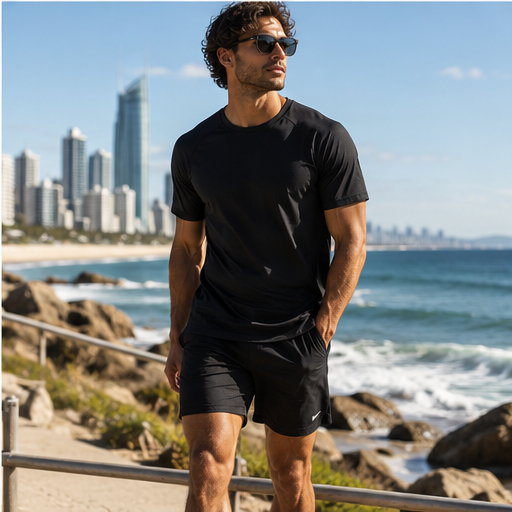
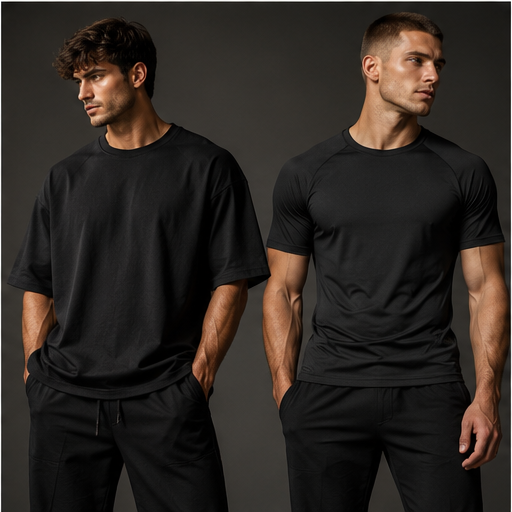
Movement matters. So does choosing the right kind of movement for what you wear. A structured everyday tee, a tapered technical top and a pair of shorts can all feel comfortable for different reasons.
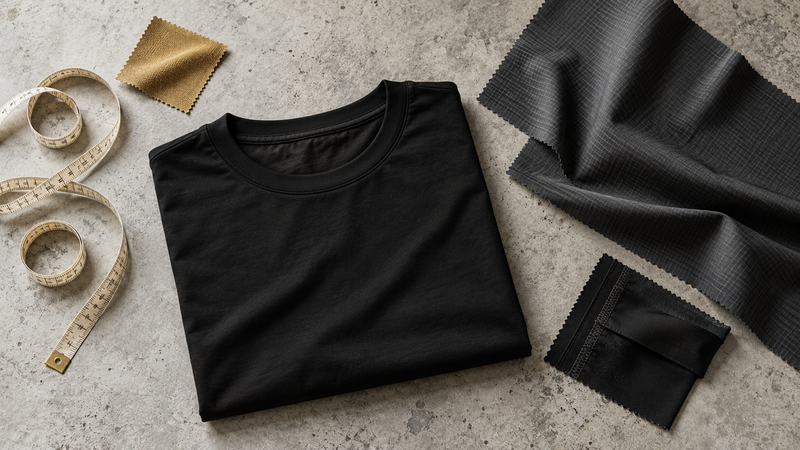
At LGLGFG Apparel, ActiveEdge is the fabric and construction approach behind selected pieces. It allows different materials to serve different jobs. There is more on that in our guide to the ActiveEdge fabric system.
What is four-way stretch?
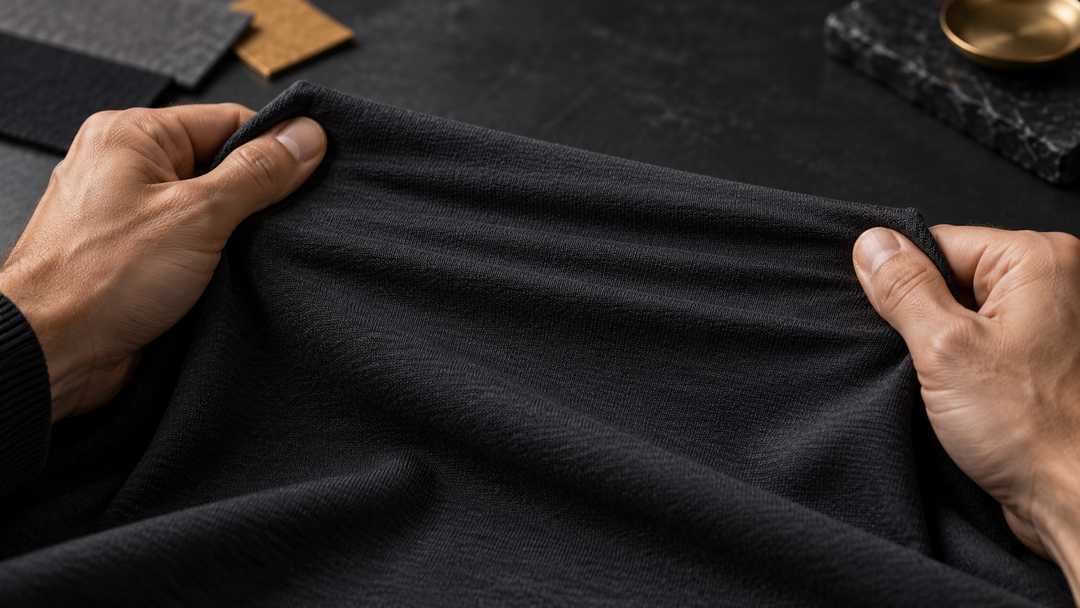
Four-way stretch generally describes fabric that stretches in both its length and width. That gives the material room to move across two axes, rather than mainly in one direction.
It is useful when a garment needs to accommodate movement in several directions. Think bending at the hips, reaching, taking a longer stride or sitting down. The amount of stretch still varies between fabrics, and the phrase alone does not tell you how far a material stretches or how firmly it pulls back.
For LGLGFG, look for an explicit four-way stretch or 4-Way Mobility statement on the relevant product. A general reference to comfort or flexibility is less specific.
Stretch and recovery do different jobs
Stretch is how much a material gives under tension. Recovery is how it returns after that tension is released. You notice the first when you move. You notice the second when the garment settles back into shape.
Neither should be read as a lifetime guarantee. Wear, washing and the care a piece receives all matter. The useful question is whether the garment's stated fabric and construction suit the way you plan to use it.
Does elastane automatically mean four-way stretch?
No. Elastane, also called spandex, tells you an elastic fibre is present. The fibre blend and fabric structure together affect the finished material. Seeing elastane on a composition list does not, by itself, confirm stretch in both directions.
The Axion T | AE, for example, is described as a polyester-elastane tee with stretch and a tapered fit. Read that description for what it states. If a particular stretch direction is essential to you, confirm it rather than extending a general stretch claim.
An AE example with four-way give
The Aegis Shorts | AE product description specifically lists a polyester-spandex fabric chosen for its four-way give. That makes it a useful starting point when multidirectional fabric movement is part of your buying decision.
Compare that with the Hybrid T | AE, described as a cotton-polyester blend with a straight, structured fit. It has a different brief. The AE name does not turn that blend into the same fabric used in the shorts.
You can compare those options in the AE Tech collection, or browse the men's shorts collection for the shape and coverage you want.
Fit still decides how freely you move
A stretch fabric can only do so much if a garment is too tight through the seat or shoulders. Equally, a relaxed cut can give useful movement without a high-stretch material.
Check the size guide for the exact piece, including how its measurements are taken. Think about where you need room. For shorts, that may be the hip, thigh and rise. For a top, look at the shoulder, chest and length.
This is where the F5 Framework matters. Fabric works alongside Fit and Function. Our article on ActiveEdge within F5 explains why none of those decisions stands alone.
What to check before you choose
- Find an explicit four-way stretch statement if that feature is essential.
- Check whether the description refers to the whole garment or a particular panel.
- Compare the fit and measurements with a piece you already wear comfortably.
- Read the care instructions for that garment.
Once you have chosen, follow the garment label. Our ActiveEdge care guide is a useful companion, with the individual label taking priority.
Buy for the movement you need. The right fabric and the right fit should make that decision easier.